



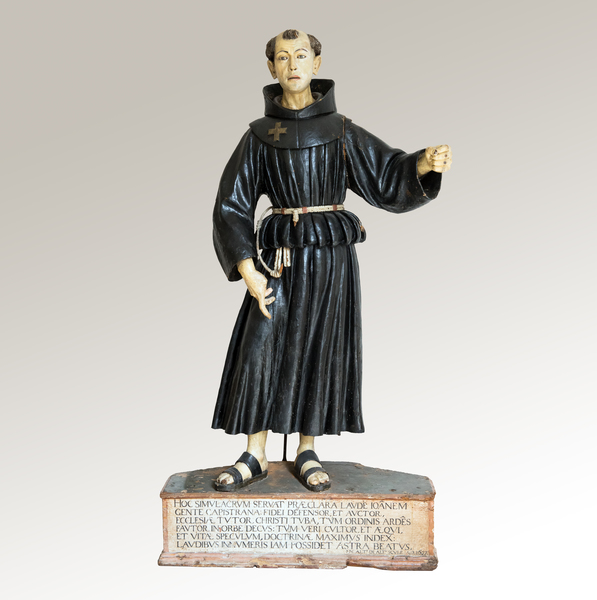
| Scheda | 53 |
| Nome immagine | mudima_53.jpg |
| Materiale | Legno intagliato e dipinto |
| Autore | Giuseppe Nicola Altieri |
| Datazione | 1697 |
| Provenienza | Chiesa di San Francesco di Paola, Altamura |
| Iscrizione | «hoc simulacrum serva t præclara laude ioa(n)nem | gente capistrana fidei defensor, et auctor, | ecclesiæ tutor, christi tuba, tum ordinis arde(n)s | fauctor in orbe decus: tum veri cultor, et æqui, | et vitæ speculum, doctrinæ |
San Giovanni da Capestrano
Adeguatamente apprezzata per la prima volta in occasione delle mostre nel Palazzo Loffredo di Potenza (2009) e successivamente nel prestigioso Palazzo Medici Riccardi di Firenze (2010), l’opera raffigurante San Giovanni da Capestrano costituisce una pregevole testimonianza dell’attività scultorea dell’altamurano Giuseppe Nicola Altieri. Come riferisce Berloco (1977-1978, pp. 199-200, 220, fig. 1, nota 34), che per primo la rendeva nota alla critica, riportando altresì l’iscrizione e la firma apposte sul basamento, la statua proveniva dal convento di San Francesco d’Assisi di Altamura – non più esistente – e, dopo le soppressioni napoleoniche, fu trasferita nel 1867 presso la chiesa di San Francesco di Paola. Il santo indossa un saio scuro raccolto all’altezza della vita da un cingolo che interrompe la continuità del panneggio, dando vita in questo modo a un gioco di fitte pieghe. La resa morbida del modellato e la descrizione naturalistica dei particolari infondono al volto austero del personaggio un forte realismo. La grande abilità nel trattamento delle superfici e nella resa espressiva non lascia dubbi sulla formazione artistica dell’Altieri. Infatti, in attesa di rinvenimenti documentari che lo attestino, è verosimile che lo scultore – come già era avvenuto per il padre Filippo – abbia soggiornato a Napoli presso la bottega di qualche scultore affermato, entrando così in contatto con la cultura artistica partenopea. Nel San Giovanni da Capestrano si evincono difatti concordanze stilistiche con la coeva produzione lignea napoletana. A tal proposito risultano appropriati i confronti con le opere di Gaetano Patalano, in special modo con il Sant’Antonio da Padova nella chiesa di Santa Chiara a Lecce, realizzato entro il 1692 (si veda R. Casciaro, in Sculture 2007, pp. 246-247, n. 41), vicino alla scultura qui presentata per il vigore espressivo, la postura solenne e l’attenta indagine naturalistica. Tuttavia è ovviamente alle opere del padre Filippo che l'artista volge maggiormente attenzione, in virtù sia di una primigenia formazione, sia nell’emulazione delle tecniche e dei rudimenti scultorei appresi in bottega che si troverà a condurre a seguito della prematura perdita del genitore avvenuta nel 1684.