



| Scheda | 45 |
| Nome immagine | mudima_45.jpg |
| Materiale | carta, acquerello |
| Autore | ignoto |
| Datazione | 1731 |
| Provenienza | Archivio Diocesano sezione di Altamura |
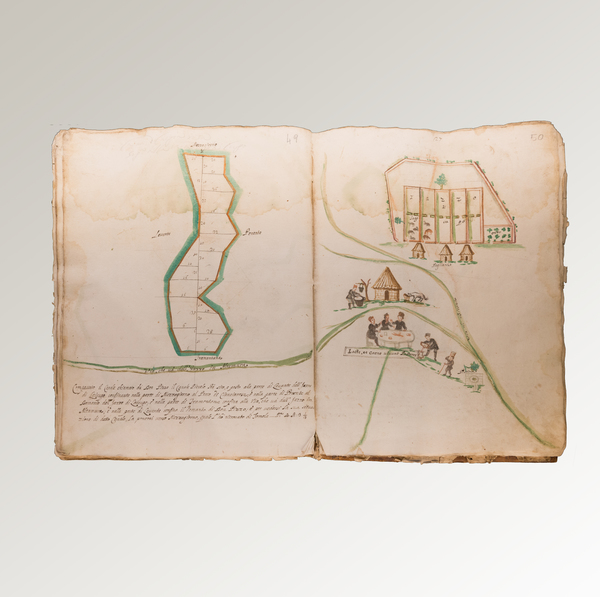
Platea dei beni immobili della Reverenda Fabbrica dell’Assunta
Le platee sono un tipo di documentazione amministrativa prodotta tra XVII e XVIII secolo dalla reverenda fabbrica dell’Assunta. Gli esemplari di tale tipologia documentaria erano denominati in origine “Cabreo”, mentre “Platea” è il termine largamente usato nell’Italia meridionale. Si tratta di registri che potevano avere varie dimensioni all’interno dei quali veniva elencato il complesso dei beni immobili appartenenti ad un ente ecclesiastico, con le relative rendite. In alcuni casi, come quelli di Altamura, non era estraneo alla loro compilazione anche un certo gusto estetico, il quale si esercitava soprattutto nel decorare le prime carte con illustrazioni di solito eseguite ad inchiostro ed acquerello. Entrambe le platee sono manoscritte su carta pesante, in cattivo stato di conservazione ed in parte spaginate. Quella più piccola non riporta un’intestazione: la prima carta, fuori numerazione, ha annotato solo la data del 1688. La platea del 1731 ha la tipica legatura in cuoio con piatti in cartone ed oltre a contenere planimetrie, descrizioni, confini ed estensioni delle proprietà fondiarie è ricca di numerose illustrazioni, sempre ad acquerello, anche all’interno; queste ultime permettono di avere dei quadri e delle istantanee non solo di ambienti rurali, ma soprattutto di scene di vita agro-pastorale molto dettagliate. L’abilità artistica del compilatore è già evidente nelle prime carte dove, oltre all’intestazione, ritroviamo rispettivamente, realizzati sempre ad acquerello, il ritratto del Rev. D. Tommaso Gramegna, procuratore dell’anno precedente a quello della realizzazione della platea, quello del Rev. D. Sergio Sallicano, in carica, una raffigurazione dell’assunzione di Maria in cielo, lo stemma prelatizio dell’arciprete De Rinaldis, prelato di Altamura; uno scorcio della città circondata da mura.