



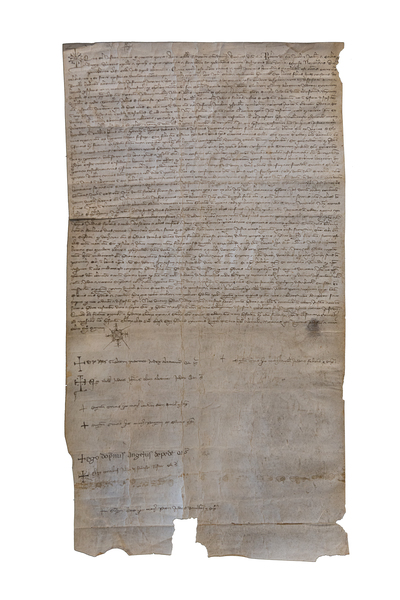
| Scheda | 43 |
| Nome immagine | mudima_43.jpg |
| Materiale | pergamena |
| Autore | Notaio Martino di Angelo de Cara |
| Datazione | novembre 29 1318 |
| Provenienza | Archivio Diocesano sezione di Altamura |
Testamento
Testamento di Luca di Ursone in fav ore dei preti della Maggior Chiesa, scrittura minuscola notarile, lingua latina. Attraverso l’analisi di tre unità archivistiche risalenti al XIV secolo è possibile seguire l’iter di creazione del documento notarile: la richiesta delle parti contraenti il negozio giuridico fatta al notaio alla presenza di giudici e testimoni; la stesura della minuta da parte del rogatario; la redazione in mundum su pergamena effettuata dallo stesso con seguente apposizione del signum notarile e delle firme dei testimoni (Pratesi 1979, pp. 43-56). Queste tre fasi sono testimoniate rispettivamente dal bastardello del notaio altamurano Martino di Angelo de Cara, dalla minuta di un negozio giuridico, detta anche imbreviatura, e dalla redazione finale del documento su pergamena. Il bastardello è un quadernetto cartaceo su cui i notai appuntavano provvisoriamente atti di diversa natura. Nella minuta del documento si andava ad impostare quello che poi sarebbe diventato il documento finale, con tutte le formule e le informazioni previste, affinché poi avesse validità giuridica. La fase finale del processo di formazione del documento, in questo caso un testamento redatto su pergamena dal notaio Martino di Angelo de Cara nel 1318, vede l’apposizione del signum notarile e delle sottoscrizioni dei giudici e dei testimoni (Cordasco 1994, pp. 36-38).