



| Scheda | 35 |
| Nome immagine | mudima_35.jpg |
| Materiale | legno intagliato, dorato e dipinto |
| Autore | Filippo Angelo Altieri (attribuito) |
| Datazione | 1674 circa |
| Provenienza | Aule Capitolari della Cattedrale di Altamura |
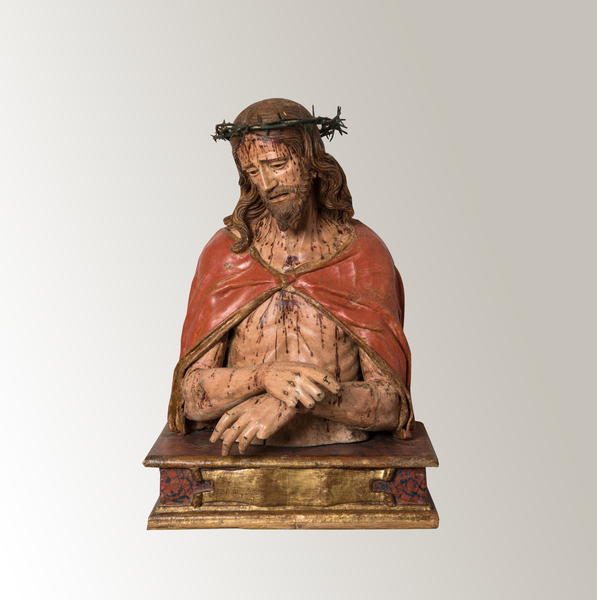
Busto dell'Ecce Homo
Il busto raffigurante l’Ecce Homo è un esemplare superstite che fa parte dei piccoli misteri della Passione, i cui modelli non erano destinati per un’esposizione pubblica, così come accade invece per le opere di formato più grande che in molti centri iberici e dell’Italia meridionale, come Altamura, sono spesso protagoniste di carismatiche e sentite processioni durante i riti della Settimana Santa, ma per essere utilizzate come arredo liturgico di altari all’interno di cappelle private o per una devozione domestica. Il Cristo, rappresentato a mezzo busto nel mentre protende in avanti le braccia incrociate con i polsi sovrapposti verso i suoi carnefici, è raffigurato con il volto declinato sul lato destro e con lo sguardo affranto e mistico riverso in basso accetta il suo destino di Salvator mundi. L’analisi stilistica permette di attribuire l’opera allo scultore altamurano Filippo Angelo Altieri (1646-1682) nella cui bottega hanno preso vita numerose statue lignee raffiguranti i misteri della Passione, ancora oggi esistenti nella chiesa altamurana di San Sepolcro e in quella del Carmine a Ruvo di Puglia (cfr Aruanno in Splendori 2009, p. 153). Ed è proprio con quest’ultimo ciclo scultoreo che va messo in relazione il busto, in particolar modo al Cristo portacroce, la cui esecuzione fu completata dall’Altieri nel 1674 (Aruanno in Splendori 2009, p. 153, n. 64). L’intaglio fine e accurato nei riccioli della barba e dei capelli, le mani arcuate e nervose, l’intenso realismo e patetismo del volto, denotano forti analogie nell’impianto e nei tratti stilistici con l’opera ruvese, per la quale il busto altamurano ha rappresentato un modello. La scultura si inserisce nell’ambito della produzione di figure legate alle sacre rappresentazioni della Settimana Santa e mostra una forte dipendenza dagli esempi figurativi partenopei, avvalorando l’ipotesi secondo la quale l’Altieri avevrebbe svolto il suo apprendistato nella bottega di Aniello Perrone, uno dei maggiori maestri intagliatori del terzo quarto del XVII secolo (Aruanno in Splendori 2009, p. 273).