



| Scheda | 22 |
| Nome immagine | mudima_22.jpg |
| Materiale | argento dorato, fuso, cesellato, Stemma arcipretale |
| Autore | Ignoto argentiere napoletano |
| Datazione | prima metà del XVI secolo |
| Provenienza | Aule Capitolari della Cattedrale di Altamura |
| Bibliografia | Boraccesi in La Puglia 2013, pp. 331-332. |
Calice
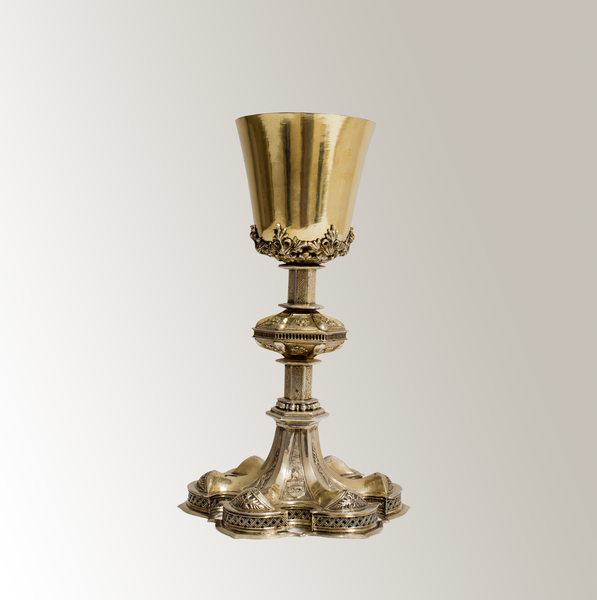
Il calice, già noto alla critica grazie a Giovanni Boraccesi (in La Puglia 2013, pp. 331-332), poggia su una grande base mistilinea, caratterizzata da lobature rientranti e sporgenti tra loro, legate da fustelli. Lungo tutto il perimetro vi è una decorazione traforata a reticolo geometrico intrecciato. Fiori gigliati ornano le terminazioni lobate. Fasce rastremate si raccordano al nodo minore sagomato, di forma esagonale, arricchito da perline. Negli incavi delle rastremature, all’interno di losanghe a spicchio, appare una serie di animali: un drago, un leone rampante avvinghiato a un arbusto, un cerbiatto con fiore a rosetta e due aquile, anche queste accostate a rami arborei. Una delle losanghe riporta uno stemma arcipretale. Nel mezzo del fusto, decorato con incisioni geometriche, il nodo maggiore, anch’esso esagonale, ma leggermente bombato e marcato da un fregio fustellato a traforo, presenta una scansione a scomparti adorni di fiori a rosetta. Una coppa dorata, avente sottocoppa con decoro fitoforme a racemi - verosimilmente foglie di cardo - s'innesta sul fusto. Evidente appare la resa plastica dell’ornamentazione che si distingue nettamente nel manufatto. Nelle forme decorative del calice è manifesta l’influenza tardogotica, specialmente nella base lobata dalla leggera ed elegante decorazione zoomorfa. Così come dimostrato dall’esempio della Cattedrale di Matera (Argenti in Basilicata, 2004, p.142) e dall’ampio repertorio presentato da Boraccesi ( 2005, pp. 54-56; 2013 p.332), il manufatto si lega alla proficua produzione di analoghi esemplari diffusi tra la seconda metà del XV secolo e la prima metà del XVI in ambito siciliano - conosciuti come di stile madonita - e napoletano. La realizzazione del calice si può collocare nella prima metà del XVI secolo, come potrebbe confermarne la datazione dell’arme impressa sulla base: una pecora che si accosta, da destra verso sinistra, a tre spighe di grano. Tale effigie può essere attribuita a Niccolò Sapio, arciprete altamurano dal 1529 al 1548 (Tota-Denora, 2012, p. 66). Lo stemma del prelato, visibile in una serie di opere della chiesa Cattedrale, riproduce in realtà gli elementi che lo compongono in modo speculare rispetto a quanto vediamo impresso sul calice. La presenza della mitria, le tre spighe di grano e il piccolo ovino non consentono dubbi circa l’identificazione dell’emblema; è possibile ipotizzare che il ribaltamento speculare dell’effigie sia attribuibile a una imprecisione esecutiva da parte del maestro argentiere che potrebbe aver realizzato lo stampo non in negativo. Considerando il forte legame esistente tra monsignor Sapio e Napoli per quanto concerne la commissione e realizzazione di opere (si vedano a tale proposito la Pala d’altare della Vergine Assunta e il coro ligneo presenti nella Cattedrale di Altamura), possiamo supporne la realizzazione in ambito partenopeo.