



| Scheda | 11 |
| Nome immagine | mudima_11.jpg |
| Materiale | Gros de Tour in seta gialla laminata e ricamata con filati dorati |
| Autore | Manifattura italiana |
| Datazione | Prima metà del XIX secolo |
| Provenienza | Aule Capitolari della Cattedrale di Altamura |
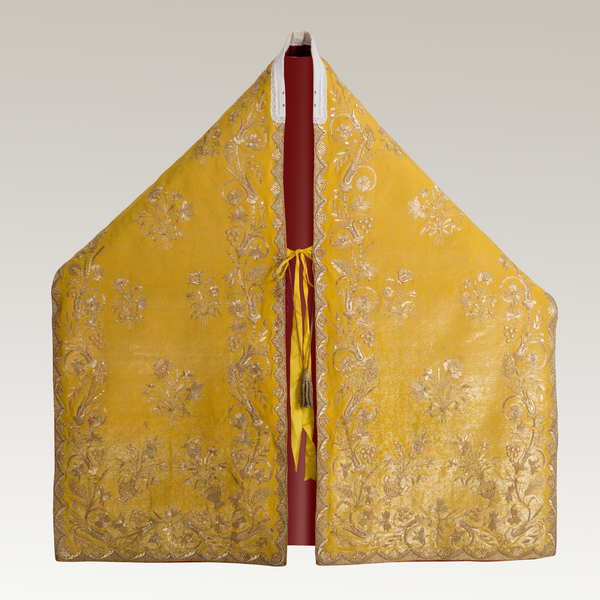
Velo omerale
Realizzato con ogni probabilità da una manifattura italiana nella prima metà del XIX secolo, il parato si contraddistingue per i motivi decorativi che si rifanno alla simbologia ecclesiastica. Tra i ricami a filo d’oro, infatti, si notano grandi grappoli d’uva con i chicchi ben divisi uno dall’altro che provengono da piccole foglie di vite, spighe di grano, rosette e piccoli rami fioriti. Il colore giallo viene tuttora utilizzato in liturgia per le occasioni più solenni e può essere sostituito dai paramenti di colore bianco. Il tessuto utilizzato per realizzare i manufatti tessili è un Gros de Tour di seta gialla laminata e ricamata in oro. Le tipologie più importanti dei punti ricamati sono: punto pieno, punto steso, punto canestro, punto erba, ricamo con imbottitura in cartone. I filati utilizzati sono il filato metallico liscio, riccio, lamina e canutiglia. Sui lembi estremi dello stolone del piviale si leggono in maniera chiara due stemmi ricamati in Gros de Tour e seta bianca laminata su cui si dispongono, nella parte superiore, sei rombi realizzati con minute perline colorate, mentre nella zona sottostante vi sono due onde. Lo stemma, appartenente al vescovo Cassiodoro Margherita, ci indica in maniera chiara che il parato fu sicuramente commissionato tra il 1828 e il 1848, anni nei quali il prelato resse la Chiesa altamurana.