



| Scheda | 49 |
| Nome immagine | mudima_49.jpg |
| Materiale | pergamena |
| Autore | ignoto |
| Datazione | XV secolo |
| Provenienza | Archivio Diocesano sezione di Altamura |
Libro liturgico
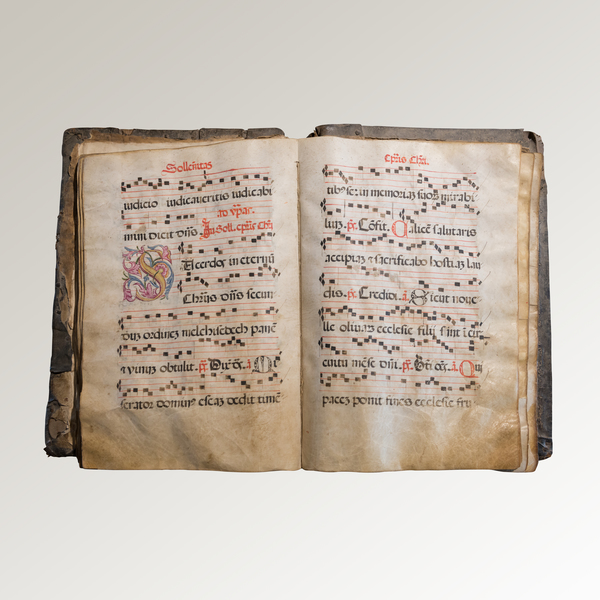
Notazione quadrata ad inchiostro nero su tetragramma rosso, scrittura gotica libraria,lingua latina. L’esemplare sembra contenere un antifonario dell’ufficio delle ore; è manoscritto, redatto su pergamena e costituito da 123 carte. Probabile la sua datazione al XV secolo, anche se non vi è certezza, in quanto il volume appare come il risultato della fusione di parti di diversi codici. La legatura è di tipo monastico, con piatti in legno ricoperti di pelle scura, quattro nervi rilevati sul dorso e una cornice a doppio filetto. Sulla copertina vi sono tracce della presenza di cantonali e borchie centrali, mentre sul piatto posteriore si rilevano i segni di un fermaglio. Sono assenti le carte di guardia. Internamente si rileva la notazione quadrata ad inchiostro nero su tetragramma rosso in chiave di Do e Fa e sette righi per ogni pagina con presenza di custos. La scrittura dell’Antifonario, tranne note ed aggiunte posteriori, è una gotica libraria ad inchiostro nero vergata, sembra, da diverse mani. Dall’analisi del testo contenuto, il libro pare incompleto e composito: sono stati ricuciti insieme i pezzi recuperati da diversi manoscritti al fine di crearne uno integrale. L’annotazione a lapis all’interno del piatto anteriore, secondo cui il manoscritto sarebbe stato acquistato nel 1520 dai monaci di S. Antonio da Padova di Altamura, fa probabilmente riferimento ad un altro codice o libro liturgico posseduto dal Capitolo.