



| Scheda | 37 |
| Nome immagine | mudima_37.jpg |
| Materiale | legno intagliato e dipinto |
| Autore | Filippo Angelo Altieri (attribuito) |
| Datazione | 1670 circa |
| Provenienza | chiesa di Santa Croce di Altamura |
Crocifisso
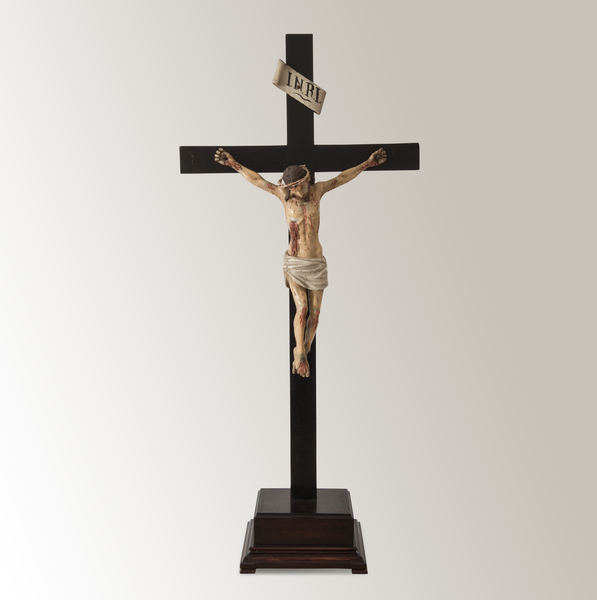
Il rinvenimento fortuito di questo Crocifisso attesta ulteriormente la grande e prolifica attività dello scultore altamurano Filippo Angelo Altieri. L’opera è da porre in stretta correlazione con quella di medesimo soggetto e di dimensioni più grandi che fa parte della serie delle sculture della Passione realizzate dall’autore, conservate nella chiesa di San Sepolcro ad Altamura e che verosimilmente provenivano dalle tredici cappelle seicentesche della Via Crucis disposte della stessa città. In entrambi i crocifissi, l’autore coglie il momento dell’espiazione, soffermandosi parimenti sulla descrizione tragica dell’evento: l’espressione patetica del volto e le evidenti ferite sanguinolenti. Infatti, ricercata è la resa fisiognomica del volto, incorniciato da ciocche ondulate e ben definite; l’espressione è completamente abbandonata, gli occhi semiaperti, la bocca socchiusa lascia intravedere la dentatura, mentre dalla ferita al costato fuoriesce un abbondante fiotto di sangue. L’intenso pathos che pervade il Crocifisso di Altamura denota affinità con le sculture lignee d’identico soggetto realizzate da scultori appartenenti all’ordine francescano come frate Angelo da Pietrafitta, attivo in Italia meridionale nella seconda metà del XVIII secolo, le cui opere sono caratterizzate da evidenti toni pietistici e da una spiccata attenzione nella resa naturalistica dei particolari. L’attribuzione dell’opera a Filippo Angelo Altieri trova conferma nel confronto con le opere certe del maestro, quali il Cristo morto conservato nella chiesa altamurana di San Francesco da Paola (Berloco 1987-1988, pp. 176-177, 187) con il quale condivide forti analogie stilistiche e uno stesso modus operandi ravvisabili nel tratto fisiognomico, nella resa drammaticamente naturalistica del corpo, nella contrazione dei muscoli addominali, nelle pieghe profonde del perizoma annodato lateralmente a occhiello.