



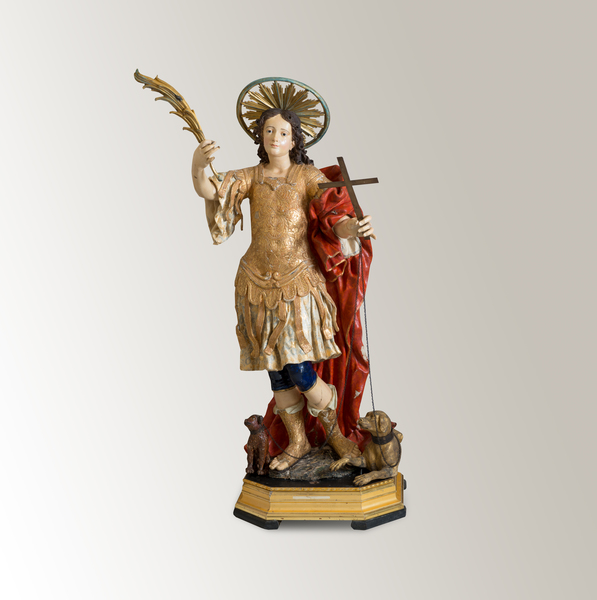
| Scheda | 28 |
| Nome immagine | mudima_28.jpg |
| Materiale | legno intagliato, dipinto e dorato |
| Autore | Nicola Antonio Brudaglio |
| Datazione | Seconda metà del XVIII secolo |
| Provenienza | Aule capitolari Cattedrale di Altamura |
San Vito martire
San Vito è raffigurato imberbe nella consueta iconografia del soldato romano, con la palma e la croce, simboli del martirio, e tiene al guinzaglio due cagnolini. Il culto del Santo è attestato sin dal V sec, sebbene poche siano le notizie certe. La fonte agiografica più autorevole è il Martirologio Geronimiano che riporta la notizia della morte avvenuta in Lucania - e questo potrebbe spiegarne la diffusione anche nella vicina Altamura – mentre è noto in tutta Europa poiché nel medioevo San Vito era annoverato fra i quattordici santi ausiliatori, la cui intercessione era considerata particolarmente importante per guarire determinate malattie. Il panneggio ricco e vivace, le frange mosse della lorica e la decorazione del gonnellino sottostante manifestano la mano di un artista originale che ha saputo ravvivare gli attardati schemi compositivi di impostazione napoletana diffusissimi in Puglia. La veste indossata dal Santo mostra sapiente decorativismo nella caratterizzazione calligrafica del disegno; ricercato ed elegante è l’intaglio della corazza sovrapposta. Il mantello, che cade a fitte e grandi pieghe sull’avambraccio sinistro, contribuisce a spezzare l’effetto di climax nell’impostazione della figura e a conferirle dinamismo. La statua poggia su un basamento a forma esagonale di epoca successiva. Aggiunte posticce sono probabilmente la corona e il guinzaglio in metallo. Il rinnovamento dello schema compositivo dell’impostazione della figura, la vivacità del panneggio, il decorativismo delle vesti e la raffinata policromia della lorica, l’espressione del volto estremamente caratterizzata inducono ad attribuire la statua di San Vito alla mano esperta del Nicola Antonio Brudaglio che operò in Puglia e Basilicata e le cui numerose opere sono ancora in fase di studio e ricerca.