



| Scheda | 16 |
| Nome immagine | mudima_16.jpg |
| Materiale | Saia di seta beige ricamata con filati policromi e inserti di tulle |
| Autore | Manifattura francese |
| Datazione | Primi anni del XIX secolo |
| Provenienza | Aule Capitolari della Cattedrale di Altamura |
| Stemmi | Gioacchino de Gemnis (1783 – 1818) |
Piviale
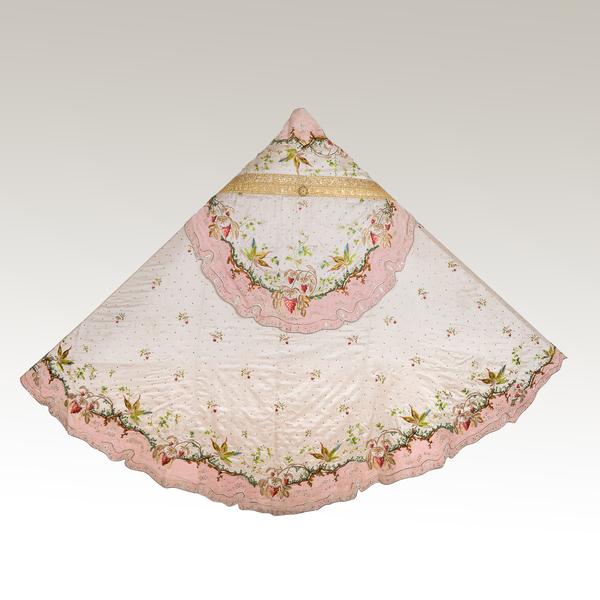
Il piviale, di forma semicircolare, presenta uno stolone decorato da un ricamo a punto pittura in cui si alternano tralci di foglie e frutti espressi con straordinaria fantasia cromatica e figurativa. Essi formano una coloratissima ghirlanda continua lungo la profilatura, raccordando la diagonale di seta bianca, sulla quale si svolge parte del ricamo, con una larga fascia in cotone di colore rosa, impreziosita da tulle sovrapposto e lavorato a fuselli, su cui ricadono altri particolari descrittivi del ricamo. Identica fascia percorre come bordura l’intero manufatto. Il tulle che accompagna la bordura del piviale è ulteriormente decorato con una sorta di cavità ovali, chiuse da un leggero reticolo, nel quale era uso inserire petali di rosa per la profumazione dell’indumento; qualche petalo, ovviamente secco, è sopravvissuto fino a noi, come testimonianza di un vezzo “profano”. Infine, sulla restante superficie del manto sono ordinatamente disposte a scacchiera alcune serie di fiorellini ricamati fra numerose paillettes. I ricami utilizzati sono: punto pittura o raso, punto nodini, punt’erba e punto steso. Sullo stolone è presente l’arma di mons. De Gemmis (che resse la Chiesa altamurana dal 1783 al 1818, Denora – Tota 2012, pp. 109-110) ed è composta dall’inquartato: nel 1° e nel 4° campo d’azzurro alla fascia d’oro sovrastante una scala d’oro posta in sbarra a 5 pioli accompagnata in capo da tre gemme rosse rilucenti ordinate in fascia; nel 2° e 3° d’oro al bove (la posizione della coda lo contraddistingue da un toro) marciante di bianco al naturale. Sormontato da galero verde con 6 nappe verdi 1, 2, 3; con croce astile semplice posta in palo dietro lo scudo. Secondo una tradizione altamurana ormai consolidata, il tessuto per la realizzazione di questo piviale fu donato a De Gemnis da Gioacchino Murat, re di Napoli. In realtà, analizzando la natura della decorazione dello stesso, molto vicina a quelli realizzati tra la fine del XVIII e l’inizio del XIX secolo in Francia e destinati a una clientela femminile, sarebbe molto più verosimile che la “stoffa” fosse stata donata al prelato altamurano da Giulia Clary, moglie del primo re napoleonide di Napoli Giuseppe Bonaparte o al più da Carolina Bonaparte, moglie di Murat.