



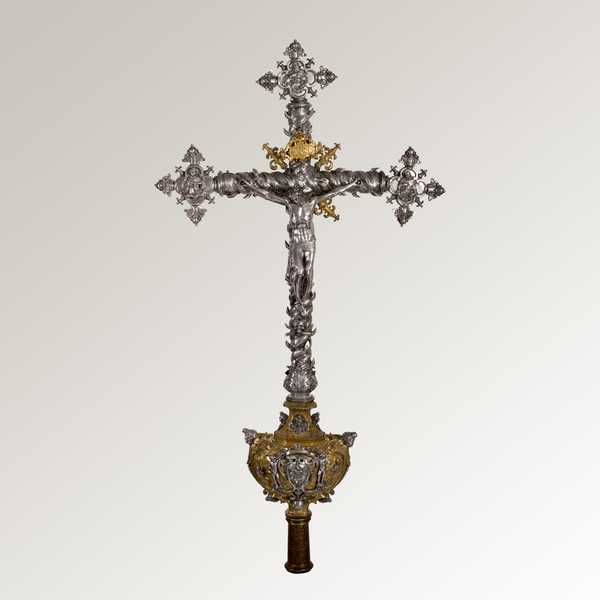
| Scheda | 1 |
| Nome immagine | mudima_1.jpg |
| Materiale | argento fuso e cesellato, rame dorato |
| Autore | Ignoto |
| Datazione | fine XVI inizi XVII sec. |
| Provenienza | Aule Capitolari della Cattedrale di Altamura, già Convento dei Padri Minori Osservanti di San Francesco |
Croce Astile
Da un bulbo di rame dorato, bipartito da una fascia con testine d’angelo e completato in entrambe le facce con gli stemmi dell’Assunta e dell’Ordine francescano, s’innalza, finemente incisa in argento, una croce tortile che simula un albero nodoso – chiaro riferimento al Lignum Vitae tanto caro al mondo francescano grazie agli scritti di San Bonaventura – arricchito di girali di vite, la pianta della vita per eccellenza secondo la tradizione paleocristiana (Argenti in Basilicata 1994, p.78; T. Berloco in Altamura 1977-78, p. 225; G. Boraccesi in La Puglia 2013 pp. 334-335). Sul fronte del crocifisso vi è l’immagine del Cristo; l’impostazione della figura, ritratta col capo riverso in avanti, rivela il retaggio della cultura riformata e risente del gusto tardo manierista ancora lontano dal coinvolgimento emotivo tipico del barocco. L’immagine di San Francesco presente sul retro è rappresentata con lo sguardo estatico, il corpo ancheggiante e il saio francescano reso attraverso un panneggio bagnato a grandi volute. All’incrocio dei bracci vi sono tre spade di rame dorato (originariamente quattro) a forma di gigli. Le estremità dei tre bracci superiori terminano in testate trilobate circondate da testine d’angelo e gigli riproposti anche sul retro; sul verso vi sono le figure di tre santi francescani: a destra S. Antonio da Padova (rappresentato con il libro nella mano sinistra, a ricordo della dottrina evangelica, e il giglio, oggi scomparso, nella mano destra), in alto S. Bonaventura da Bagnoregio (con il cappello cardinalizio e libro), a sinistra una terza figura di maestro di dottrina, identificabile con S. Bernardino da Siena. I santi vestono l’abito conventuale riconoscibile dal cappuccio. La croce astile, già nota alla critica (T. Berloco in Altamura 1977-78, pp. 220-221, G. Boraccesi in La Puglia 2013, pp. 334-335), fu utilizzata dal Capitolo cattedrale in particolar modo nelle funzioni funebri. La provenienza dal convento dei Minori di San Francesco è attestata sia dalla presenza dello stemma francescano presente su un lato del bulbo (l’altro, probabilmente successivo, raffigura l’Assunta), sia da documenti dell’archivio capitolare; in particolar modo dalla conclusione capitolare del 2 marzo 1819 (data letta da Tommaso Berloco come 1817, cfr. Altamura 1977 -78, pp. 221-223) desumiamo che la croce fu depositata presso la Curia e che detta croce « […] tenevasi de’ soppressi Padri Osservanti per esser tenuta loco depositi in questa sagrestia con la facoltà di potere il Capitolo servirsi della medesima in tutte le Pubbliche funzioni e coll’obbligo di restituirsi la medesima ad ogni richiesta della Commune […] (T. Berloco in Altamura 1977-78, p. 222)». I documenti successivi ci indicano che, dopo anni di incertezza circa la proprietà, il crocifisso fu infine acquistato il 28 agosto 1850 dal Capitolo tramite il conte Viti per la cifra di trecento ducati (T. Berloco in Altamura 1977-78, p.224). Analizzando gli elementi stilistici e confrontando l’opera con altre croci ad albero datate presenti nella vicina Basilicata (si veda l’ampio repertorio proposto in Argenti in Basilicata 1994), si potrebbe ipotizzare una datazione compresa tra la fine del XVI secolo e gli inizi del XVII.